
A new film, Tapped, exposes just how the bottled water industry works. The film delves into the chemicals that are used to make plastic bottles, chemicals that are being blamed for a whole catalogue of health issues. Finally Tapped discusses the political and social implications of water privatisation, in a world where at present one millions people have no access to fresh water.
The bottled water industry is a multi-billion dollar business, and demand is increasing steadily. Private corporations set up shop in local communities, leeching massive quantities of municipal water for pennies on the dollar, pouring it into some PET bottles and selling it back to the same community at a frightening 1,900 percent mark-up. Tapped explores the ethical, financial, and ecological impact of the beverage industry from numerous angles: the sustainability of freshwater as a resource, the privatisation of water as a commodity, the toxic effects created to manufacture the petroleum by products used to make plastic water bottles, and the ever-increasing dumping of plastic bottles into our ecosystem. The world may be heading for a water crisis

Selling bottled water to the public—the very act of getting people to pay for a product essentially available for free—just might be the biggest advertising coup ever perpetrated. From afar, you have to admire the sheer audacity of it. The more you think about it with your brain, the sillier it sounds. Go back fifty years and pitch the idea to the chain-smoking Mad Men boys, and they'd laugh you right out of the office. Yet today, advertisement and marketing has convinced the public at large that bottled water is safe, while in contrast, tap water is a cesspool of disease and filth. In actuality, the opposite is true; the beverage industry is not government regulated in terms of safety, while municipal sources (tap water) go through rigorous and strenuous testing. By bottling at a municipal source and selling only within the same state, the beverage industry circumvents FDA requirements, allowing self-regulation.
The facts and figures brought up during the course of this film are shocking. Tapped argues that our consumer shift towards consuming water in plastic bottles has created a serious paradigm shift, putting control of a key resource into the hands of private corporations which only have financial interests at heart. And then there's the plastic. The staggering waste of plastic bottles in landfills and oceans is terrifying to behold. With over half of the world lacking access to kerbside recycling services and industry lobbyists fighting to prevent plastic water bottles from being included in container deposit legislation, most plastic bottles end up as waste. The environmental impact is incalculable.
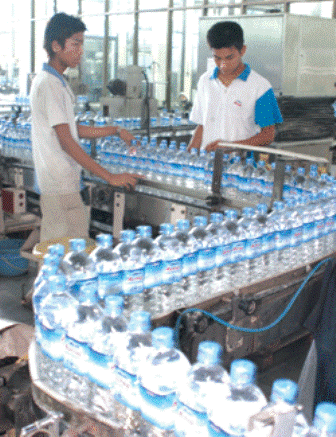
What plastic bottles are made of.
All plastic bottles are made from Bisphenol A,(commonly abbreviated as BPA), is the building block molecule, that all hard and clear plastics are made of . Products containing bisphenol A-based plastics have been in commerce for more than 50 years. Bisphenol A, is an organic compound with two phenol functional groups used to make polycarbonate plastic and epoxy resins, along with other applications.
Known to be estrogenic since the mid 1930s, concerns about the use of bisphenol A in consumer products were regularly reported in the news media in 2008 after several governments issued reports questioning its safety, thus prompting some retailers to remove products containing it from their shelves. A 2010 report from the United States Food and Drug Administration (FDA) raised further concerns regarding exposure of fetuses, infants, and young children
A front page story in the Independent, carried a report of a group of 60 scientists who have called for BPA’s withdrawal from commercial use. Whist a new study from Harvard School of Public Health (HSPH) researchers, found that participants who drank for a week from polycarbonate bottles -- the popular, hard-plastic drinking bottles and baby bottles -- showed a two-thirds increase in their urine of the chemical bisphenol A (BPA). Exposure to BPA, used in the manufacture of polycarbonate and other plastics, has been shown to interfere with reproductive development in animals and has been linked with cardiovascular disease and diabetes in humans.
For anyone concerned about the implications of what is a finite resourse, Tapped is a must see film.

