Monday, 30 August 2010

The marketing and selling of water.


A new film, Tapped, exposes just how the bottled water industry works. The film delves into the chemicals that are used to make plastic bottles, chemicals that are being blamed for a whole catalogue of health issues. Finally Tapped discusses the political and social implications of water privatisation, in a world where at present one millions people have no access to fresh water.


The bottled water industry is a multi-billion dollar business, and demand is increasing steadily. Private corporations set up shop in local communities, leeching massive quantities of municipal water for pennies on the dollar, pouring it into some PET bottles and selling it back to the same community at a frightening 1,900 percent mark-up. Tapped explores the ethical, financial, and ecological impact of the beverage industry from numerous angles: the sustainability of freshwater as a resource, the privatisation of water as a commodity, the toxic effects created to manufacture the petroleum by products used to make plastic water bottles, and the ever-increasing dumping of plastic bottles into our ecosystem. The world may be heading for a water crisis


Selling bottled water to the public—the very act of getting people to pay for a product essentially available for free—just might be the biggest advertising coup ever perpetrated. From afar, you have to admire the sheer audacity of it. The more you think about it with your brain, the sillier it sounds. Go back fifty years and pitch the idea to the chain-smoking Mad Men boys, and they'd laugh you right out of the office. Yet today, advertisement and marketing has convinced the public at large that bottled water is safe, while in contrast, tap water is a cesspool of disease and filth. In actuality, the opposite is true; the beverage industry is not government regulated in terms of safety, while municipal sources (tap water) go through rigorous and strenuous testing. By bottling at a municipal source and selling only within the same state, the beverage industry circumvents FDA requirements, allowing self-regulation.

The facts and figures brought up during the course of this film are shocking. Tapped argues that our consumer shift towards consuming water in plastic bottles has created a serious paradigm shift, putting control of a key resource into the hands of private corporations which only have financial interests at heart. And then there's the plastic. The staggering waste of plastic bottles in landfills and oceans is terrifying to behold. With over half of the world lacking access to kerbside recycling services and industry lobbyists fighting to prevent plastic water bottles from being included in container deposit legislation, most plastic bottles end up as waste. The environmental impact is incalculable.
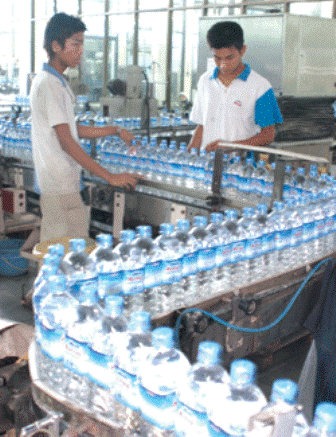


What plastic bottles are made of.
All plastic bottles are made from Bisphenol A,(commonly abbreviated as BPA), is the building block molecule, that all hard and clear plastics are made of . Products containing bisphenol A-based plastics have been in commerce for more than 50 years. Bisphenol A, is an organic compound with two phenol functional groups used to make polycarbonate plastic and epoxy resins, along with other applications.
Known to be estrogenic since the mid 1930s, concerns about the use of bisphenol A in consumer products were regularly reported in the news media in 2008 after several governments issued reports questioning its safety, thus prompting some retailers to remove products containing it from their shelves. A 2010 report from the United States Food and Drug Administration (FDA) raised further concerns regarding exposure of fetuses, infants, and young children

A front page story in the Independent, carried a report of a group of 60 scientists who have called for BPA’s withdrawal from commercial use. Whist a new study from Harvard School of Public Health (HSPH) researchers, found that participants who drank for a week from polycarbonate bottles -- the popular, hard-plastic drinking bottles and baby bottles -- showed a two-thirds increase in their urine of the chemical bisphenol A (BPA). Exposure to BPA, used in the manufacture of polycarbonate and other plastics, has been shown to interfere with reproductive development in animals and has been linked with cardiovascular disease and diabetes in humans.

For anyone concerned about the implications of what is a finite resourse, Tapped is a must see film.

Sunday, 29 August 2010

Zero Waste Week


Mr and Mrs Green at My Zero Waste have been busy as usual organising National Zero Waste Week. This couple work harder than anyone I know in campaigning to get us all to cut out as much waste as we can (including plastic). So the least we can all do is to support their efforts.


National Zero Waste Week takes place week beginning 6th September 2010.


This year’s theme is ‘Cooking for Victory’ in response to WRAPS “household Food and Drink Waste in the UK” report. The report shows we throw away 8.3 million tonnes of food and drink every year. Most of this is avoidable and could have been eaten if we had planned, stored and managed it better. This amount of food waste costs the average family in Britain £50 per month.


How can I join in?
Leave a comment on the site, telling them what you pledge to do to reduce your food waste. Then go back during National Zero Waste Week and let them know how you are getting on.


Be sure to bookmark this page! If you have a blog or webpage, please help spread the word by selecting one of our banners or badges and adding it to your site.


You could win!
There are two great prizes up for grabs - a £50 LUSH voucher and £50 Natural Collection voucher!


What can I pledge to do?
As long as you end up reducing your food waste in some way, you can choose anything you like. Here are some ideas:


Identify a particular food that gets thrown away every week and plan a great recipe to use it up


View your leftovers as ingredients


Say no to prepacked food and buy only the amount you need


Get your scales out for measuring rice and pasta rather than guessing and ending up with waste


Start a compost heap, wormery or bokashi bin.


How can I win?
The two people who, in the opinion of Zero Waste, have made the best effort, create innovative sounding recipes, support and encourage other participants, share great tips or simply inspire us with their creative endevours will win. Even if you already have zero food waste each week, you can still win by sharing tips, recipes and supporting others.


About National Zero Waste Week 2010
National Zero Waste Week 2010 is sponsored by Tetra Pak; the world’s leading food processing and packaging solutions company. According to WRAP around 20% of the UK´s greenhouse gas emissions are associated with food production, distribution and storage. Using packaging like long life cartons keeps products fresh until we need them, minimising food waste plus they are fully recyclable with over 86% of Local Authorities collecting cartons for recycling.


The campaign also have the support of celebrity chef, Brian Turner CBE who said, “I’m a great supporter of National Zero Waste Week. I think it’s a wonderful idea and everyone should give join in. Once you’ve done a week, then it’s only another 51 to go!”


During Zero Waste Week you’ll discover how Brian views food as an asset, promotes a ‘compost while you cook’ approach and encourages us to use our fridges and freezer as tools for minimising food waste.


natural cosmetic company, LUSH have offered one lucky winner a £50 voucher. LUSH make fresh handmade cosmetics from natural ingredients. Many of their products are available with no packaging at all, they use recycled packaging where possible and encourage consumers to recycle, reuse or compost packaging after use.


Plus, Natural Collection have offered one lucky winner a £50 voucher. Natural Collection are one of the longest-standing green online companies where every item they sell are independently vetted by an environmental expert for eco friendliness.


Two of a kind!


Apart from the excellent Fake Plastic Fish site, there are couple of other organisations across the ocean, who are trying their utmost to stem the plastic tide, Both 5 Gyres and the Plastic Pollution Coalition, are dedicated to taking whatever action is needed in a peaceful manner to bring the problems of plastic to the attention of the public.


Plastic Pollution Coalition

“The mission of Plastic Pollution Coalition is to stop plastic pollution and its toxic impacts on humans, the environment, and wildlife worldwide.


Plastic Pollution Coalition provides a platform for strategic planning and coherent communications; increases awareness and understanding of the problem and sustainable solutions; and empowers action to eliminate the negative impacts of plastics on the environment, wildlife, marine life, and human health.


Our Goals
Build Awareness
To bring the issue of plastic pollution to the forefront of the social, scientific, economic, and political debate worldwide.

Build a Global Community
To provide a platform for individuals and institutions to share resources and coordinate efforts, explore synergies and strategise together to reduce plastic pollution, with an emphasis on single-use disposables.

Empower Action
To empower citizens to shift our societies away from the disposable habits that poison our oceans and land, eliminate our consumption of throwaway plastics, and begin embracing a culture of sustainability

Support Legislation
To demand that businesses and governments take responsibility for new ways to design, recover and dispose of plastics.

Educate
To educate citizens about the threats posed by plastic to their own health and the well-being of the planet and its inhabitants.


Support Scientific Advancement
To promote the study of plastic pollution and possible solutions.”


5 Gyres

5 Gyres are another organisation that are committed to doing what they can to turn back the tide of plastic, by organising public events and meetings. At present some of the team are sailing into the South Atlantic Gyre, from Rio to Ascension Island and back. This will be the first of 3 expeditions through the South Atlantic Gyre, studying plastic pollution, the 4th in their global 5 Gyres study.


"Take a look around you- most of what we eat, drink, or use in any way comes packaged in petroleum plastic- a material designed to last forever, yet used for products that we then throw away. This throwaway mentality is a relatively recent phenomenon. Just a generation ago, we packaged our products in reusable or recyclable materials – glass, metals, and paper, and designed products that would last. Today, our landfills and beaches are awash in plastic packaging, and expendable products that have no value at the end of their short lifecycle.”

Look at both of these web sites, become followers and give them your support please


Friday, 27 August 2010

Plastic City!

Following in the footsteps of the esteemed Mr and Mrs Green over at My Zero Waste, who have written a blog about their recent holidays from a waste conscious perspective. I've just spent a few days in Leicestershire, staying with relatives. My mothers house comes under the jurisdiction of Blaby District Council, who seem to take an enlightened approach to waste, although they provide two large wheelie bins and two smaller ones (for glass and recyclables). Which can cause problems if you lack space outside of the house.


But it was a piece in the local paper, the Leicester Mercury that caught my eye, it appears that recycling rates in the city of Leicester, have actually fallen over recent years, which is in stark contract to the overall national picture where recycling has risen. Leicester City Council in conjunction with Biffa, the company who collect waste in the city, have decided to test trail a new method of collecting waste for recycling. Their plan is to get rid of the green wheelie bin and provide plastic bags instead! In its favour the new scheme will allow Biffa to collect a greater range of waste including mixed plastics. Whilst Leicester council is renowned for its innovative approach to waste, I just can't help but wonder if this isn't retrograde step?


In its favour this city council has also recently opened a state of the art recycling plant called the 'Ball Mill' a fully mechanised waste processing and recycling facility, designed to treat all household waste.


The Ball Mill is the only one of its kind in the UK and can divert up to 70% of household waste from landfill. The process extracts all metal, cardboard, plastic and organic material and sends these for recycling, composting or energy recovery.

I took a trip into Leicester itself whilst I was there too, little sign of any revolt against plastic in evidence around the city though. In fact the ubiquitous carrier bag, with the names of various companies, embedded across the front, appeared to be very much in vogue. Whilst almost every store seemed to me to be a plastic lovers heaven!

Sunday, 15 August 2010

The Story of Bottled Water.


The creator of The Story of Stuff, Annie Leonard, has now added another short documentary to her growing CV of impressive waste critiques, that inform and explain the facts about our obsession with consumerism, and the results of this obsession,  in a precise and succinct way. The Story of bottled Water is an 8 minute masterpiece that is a must watch film. If you watch only one film about waste, its causes and results, this is the one to view.

Saturday, 14 August 2010

Every Little helps!


I've just ordered a wooden toothbrush and tooth paste soap from the lovely site, Cebra. I heard about these toothbrushes on My Zero Waste, one of the better sites around for helping us all to learn how we can live a life producing little waste for landfill.


And this really is the point, of choosing to make a stand for the good of the planet, it is the little things we do, the tiny choices we make that, in the long run will clean up the mess we've all contributed to, for so long.

There must never be any sense of cohersion, or of lecturing others, for what we may perceive as their wrong actions. We are all one together on this planet, we're 'all in it together,' Thus, developing a sense of compassion and understanding, is important too, as we progress on our chosen paths. We all have to deal with personal problems and worries in our daily life's. And we're all doing what we can, given our individual circumstances, energies and resources.